
Antiviral expert warns “more needs to be done” to prepare for deadly outbreaks.
University of Alberta antiviral expert Dr Matthias Götte has joined the global chorus warning that more needs to be done to prepare for outbreaks of deadly viruses like Ebola and hantavirus.
Both viruses have been in the news recently after an outbreak of hantavirus on a Dutch cruise ship caused three deaths and led to passengers being quarantined, and an outbreak of Ebola in the Democratic Republic of Congo that has so far claimed more than 200 lives.
Götte is Chair of the Medical Microbiology & Immunology Department at the University of Alberta, and also leads its research and training programme in pandemic preparedness. He is an expert in RNA viruses, a grouping of viruses characterised by a ribonucleic acid (RNA) based genome, that are notable for causing significant human disease.
Human diseases caused by RNA viruses include influenza, SARS, MERS, COVID-19, Dengue, hepatitis C, hepatitis E, West Nile fever, Ebola, rabies, polio, mumps, and measles.
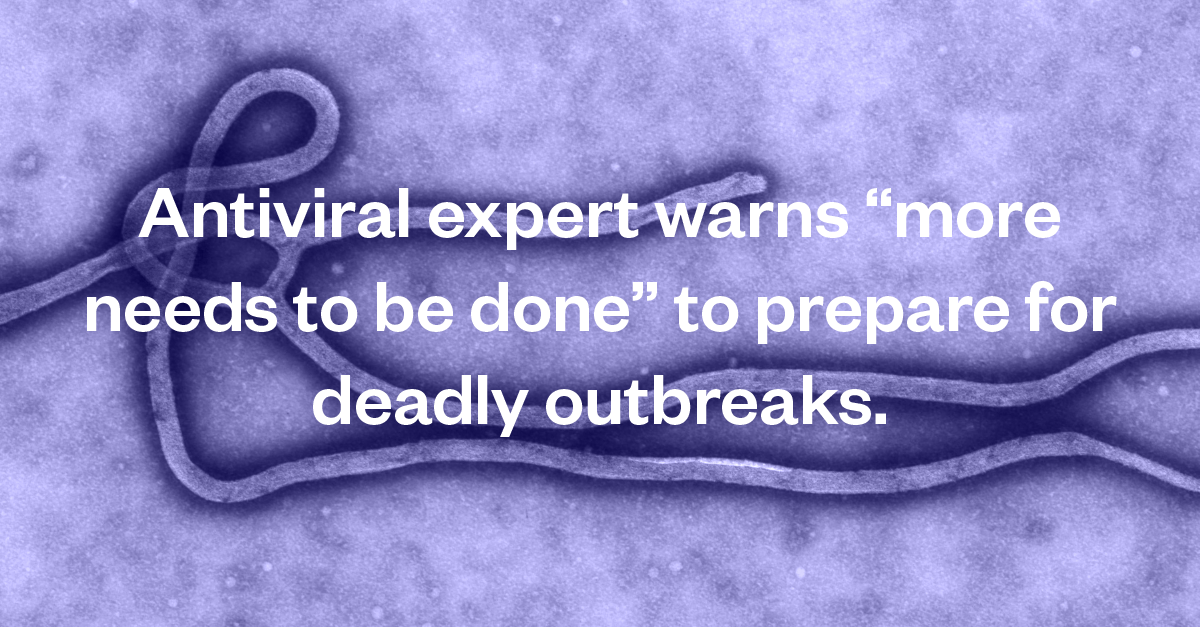
RNA viruses generally have a very high mutation rate compared to that of DNA viruses. This allows them to evolve quickly under selective pressure, creating one of the biggest challenges in antiviral drug development.
High levels of viral mutation means drug resistance can emerge rapidly, making virus-specific antivirals less effective. This has been observed with influenza, HIV, hepatitis C, and SARS-CoV-2.
This is one reason that genuinely broad-spectrum antivirals and host-directed antiviral approaches such as Kimer Med's are so vital to pandemic preparedness.
Instead of targeting rapidly changing viral structures, these strategies aim to target conserved viral functions, shared replication mechanisms, or stable host processes that viruses rely on to replicate.
Because those targets are less susceptible to mutation, approaches of this nature can reduce the risk of drug resistance, maintain antiviral activity across variants, and work against multiple virus families.
The challenge of drug resistance is especially important globally because most emerging pandemic threats - including influenza, coronaviruses, Ebola, dengue, and many haemorrhagic fever viruses - are RNA viruses.
“It’s simply because of the nature of viruses. They are able to adapt quickly, and we are always trying to catch up,” Götte says.
“So it’s important to optimize all of our workflows and continue developing broader-spectrum antivirals, antibodies and vaccines so we are able to respond as rapidly as possible.”
We couldn’t agree more. At Kimer Med we remain focused on our goals to advance a pipeline of broad-spectrum antiviral drug candidates to address both current unmet medical needs, and enhance global resilience to future pandemic threats.
Our current lead candidate compound is an antiviral drug for dengue, one of the RNA viruses mentioned above, that inflicts an enormous toll of human suffering and death throughout South America, the Caribbean, Southeast Asia, parts of Africa, Europe and the USA. In spite of global dengue cases sometimes numbering in the hundreds of millions, there is currently no approved antiviral treatment for the disease.
___
You can read the full article from the University of Alberta by clicking here.